
Grape berry moth affects every vineyard, to varying degrees, and can be especially damaging to late-maturing cultivars. We offer monitoring services for grape berry moth (along with other insect pests) and early in the season is the perfect time to start.
An important quality-control measure early in the season is monitoring for grape berry moth. There is a first generation of larvae that feeds on flowers during bloom. Later, after these first-generation larvae mature into adult moths, they give rise to the second generation of larvae, which is the more damaging of the two. After veraison, the second-generation larvae feed on grapes, by drilling their way through the skin and hollowing out the entire inside of the grape (Figure 1). They move from berry to berry within a cluster. These second-generation larvae are harder to manage because they are protected from insecticide sprays, which cannot reach within the cluster or inside the berries (Figure 2). Fruit quality is further damaged when bunch-rot fungi infect through the holes made by the larvae.
Putting a dent in the population of first-generation larvae at bloom can minimize risks to fruit quality later in the season. We recommend insecticides to be used sparingly because many are toxic to bees and also to natural enemies of grape berry moth. Insecticide application to the flowers at bloom requires lower spray volume than to the fruit after veraison. Because the larvae are more exposed at bloom, less-toxic insecticides can be used. However, when you completely overlook this opportunity at bloom, you will have to resort to high-volumes of insecticides after veraison and having to worry about long pre-harvest intervals. Also, more damage by grape berry moth is combined with more damage from bunch rots, after veraison.
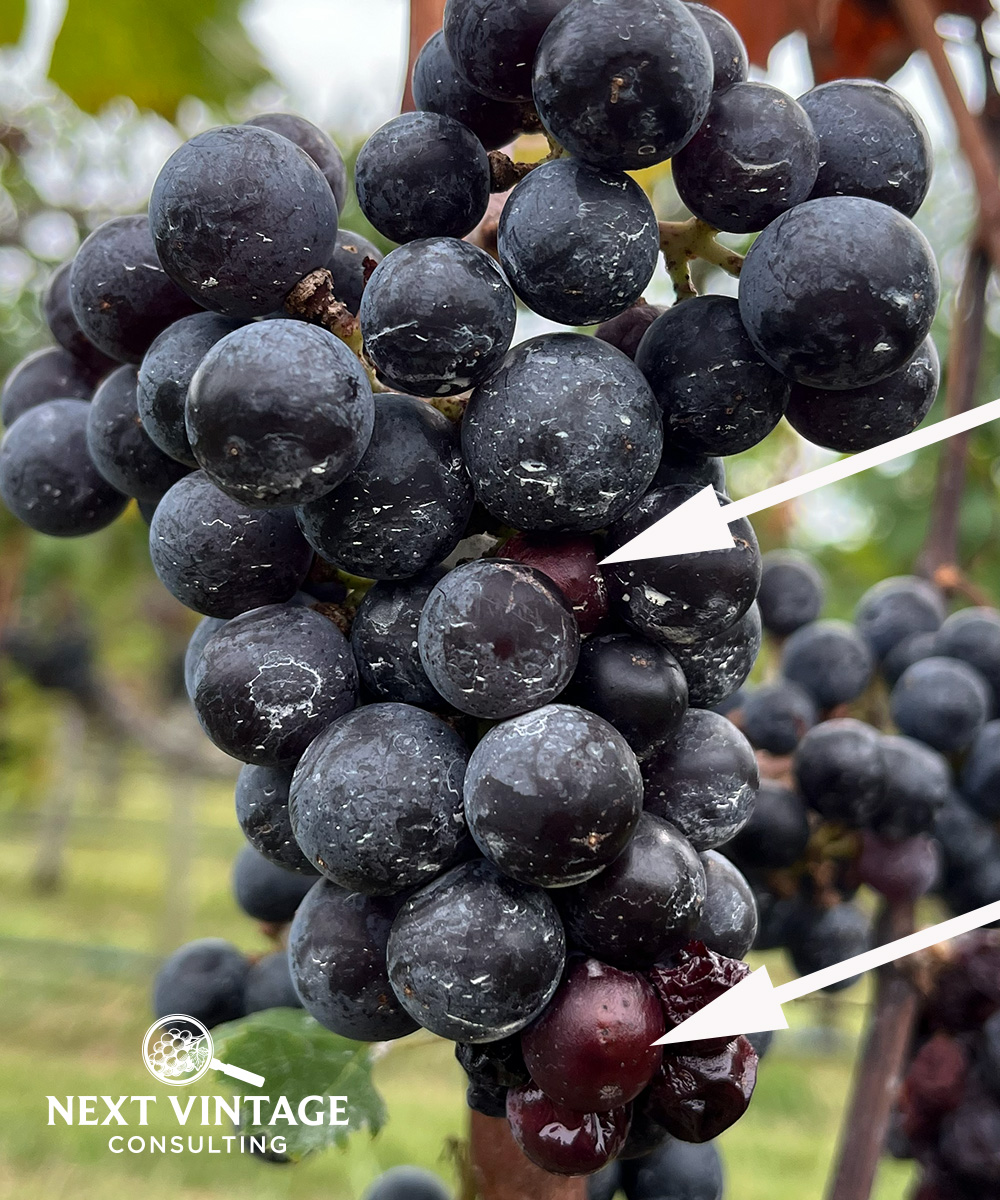
Figure 1
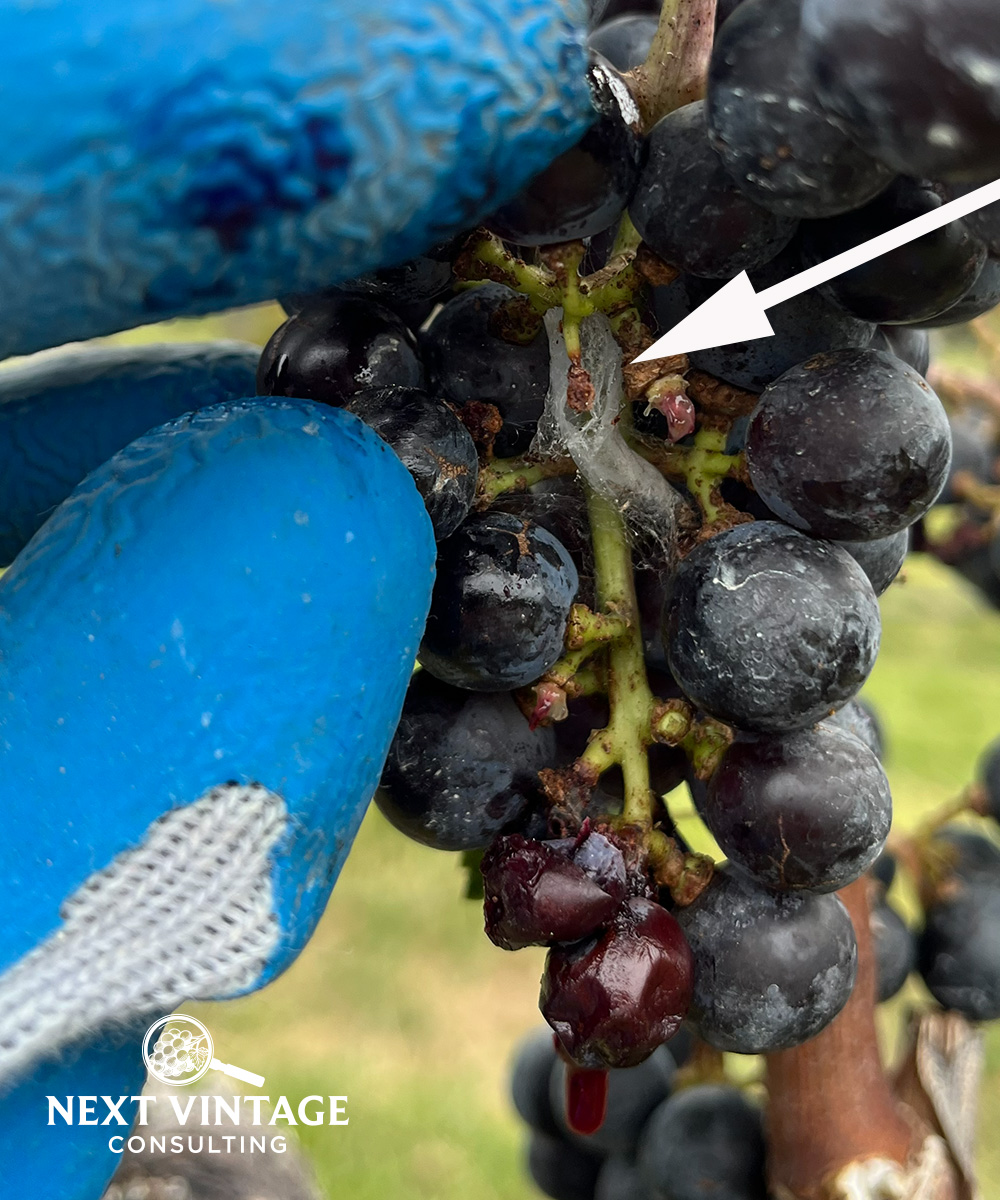
Figure 2
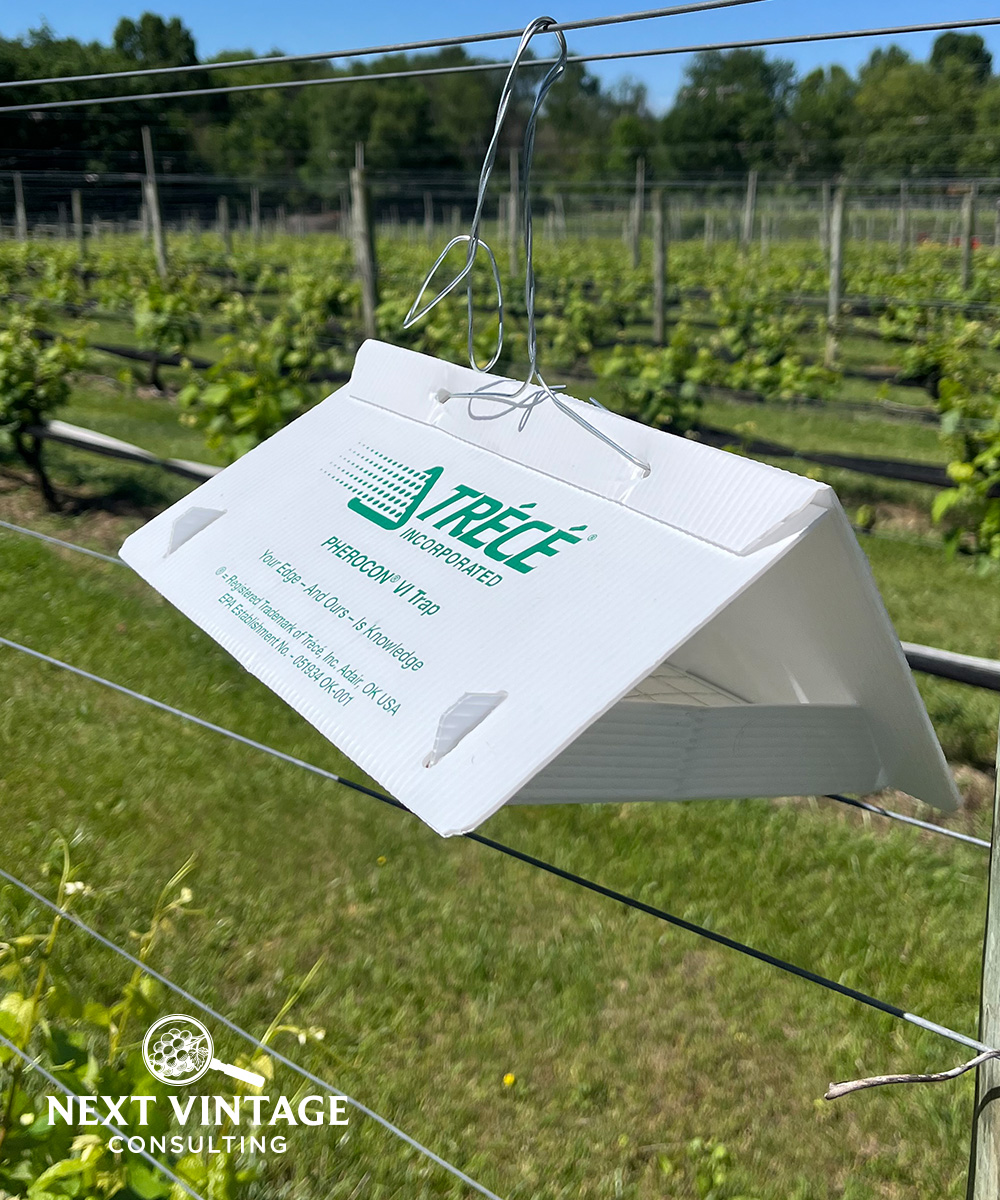
Figure 3
Here’s our 6-step process:
- During bloom, we monitor for adult moths with pheromone-bated traps that we set on the perimeter of your vineyard (Figure 3).
- We inspect flowers for first-generation larvae.
- With trap catches of adult moths, followed by damage by larvae to flowers, we recommend insecticides to target the vulnerable, first-generation larvae on the flowers.
- After veraison, we monitor for adult moths again.
- We inspect fruit for second-generation larvae.
- As needed, we recommend insecticides to target the second-generation larvae on the fruit clusters.
Pheromone-bated traps give you the site-specific data you need to treat your vineyard. You could use a web-based model to help predict when the larvae might develop, but it will be based on temperatures recorded at distant weather stations. The model includes assumptions, which might not apply to your vineyard and thus the model predictions could be off by a number of days. The traps ensure you do not miss the weeks when the first generation of larvae are in your vineyard.